
When a tiny grip on a plush toy quietly broke millions of hearts
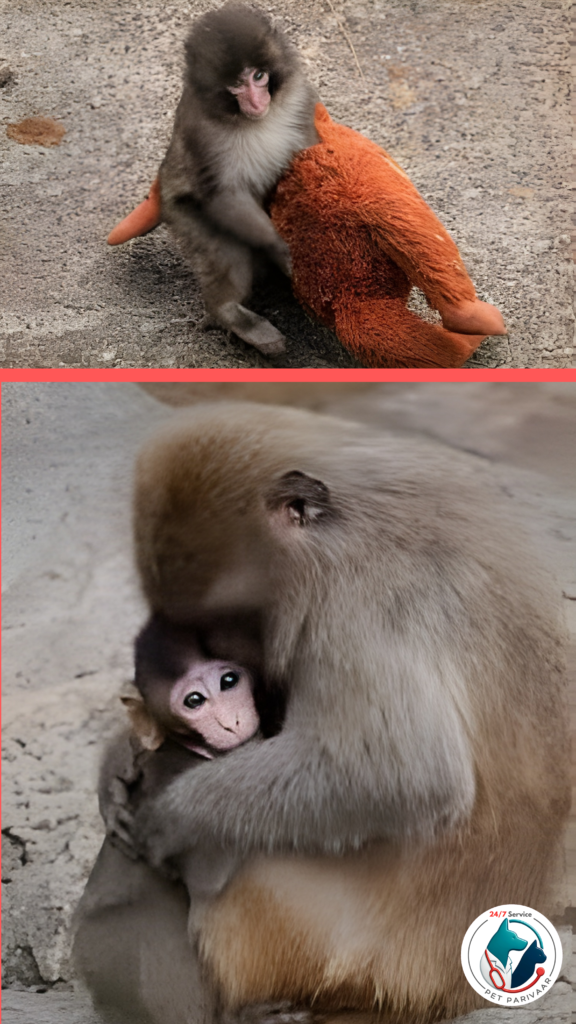
The Punch-Kan monkey viral story did not begin with noise. It began with a small, fragile image from Ichikawa Zoo — a baby macaque rejected by his mother, clinging tightly to a soft orangutan plush toy for comfort.
According to reports from The Independent, Sunday Guardian Live and WION, Punch-Kan was separated early and raised with human care. To ease his distress, zoo keepers placed a stuffed toy beside him. What they likely intended as simple enrichment became a global symbol of loneliness.
People did not just see a monkey. They saw a child searching for warmth.
His first attempt at belonging didn’t go the way anyone hoped
As Punch grew stronger, zoo staff tried to introduce him to the other macaques. That first attempt was difficult. Videos showed him approaching cautiously, only to be brushed aside or misunderstood. In one particularly tender moment, he retreated back to his plush toy after a rough interaction.
It was not dramatic. It was painfully ordinary.
Rejection, even among animals, leaves an imprint. Young primates rely heavily on grooming and physical closeness to feel secure. When that bond does not form naturally, the absence is felt in ways we may not fully understand but can clearly recognise.
That early failure deepened the emotional weight of the Punch-Kan heartbreaking story. He wasn’t just alone — he was trying.
Slowly, something began to change
Time, however, softened the edges of that rejection. In more recent footage, Punch-Kan appears more confident within the enclosure. There are signs of grooming, shared space, and tentative play. These may seem like small milestones, but in macaque society, grooming is acceptance. It is trust.
He still carries his plush toy at times, but he is no longer defined by it.
The shift is gentle but hopeful. The baby once perceived as an outcast is beginning to find his place. That is why the phrase “Punch the monkey” trended not in anger, but in fierce protectiveness. People wanted him to succeed. They wanted him to belong.
As the story spread, visitor numbers at Ichikawa Zoo reportedly spiked. People came not just to see an animal, but to witness resilience.
Why his story feels so uncomfortably familiar
The reason the Punch-Kan monkey viral story resonated so deeply is simple: attachment is universal.
When a dog is abandoned, it often waits at the same gate for days, refusing to believe its owner is gone. Many cling to worn shirts or blankets carrying a familiar scent. Cats separated too early from their mothers may suckle on fabric or attach intensely to one person, as if afraid of losing that safety again.
Animals feel separation. They feel instability. They seek substitutes for lost bonds.
Punch-Kan hugging his plush toy was not a staged moment. It was instinct — the same instinct that makes a rescued puppy follow a volunteer everywhere or a stray cat press against the first hand that shows kindness.
His later progress does not erase the initial pain, but it reminds us that healing is possible when there is patience and care.
A quiet reminder that emotional care is not optional
In India, millions of stray dogs and cats grow up in uncertainty while pet ownership continues to rise. We talk about food, shelter, and safety — and those things matter. But so does affection. So does stability and care.
Some pets spend hours alone on balconies, watching the world move without them. Others enter homes filled with excitement, only to leave quietly when responsibility feels heavier than expected. Many street animals manage to survive each day, yet carry a loneliness we rarely notice. How many animals are adopted impulsively and later abandoned when responsibility feels heavy?
Punch’s journey from rejection to gradual acceptance invites deeper reflection. Not outrage. Not blame. Reflection.
He began by clinging to a toy because it was the closest thing to comfort he had. Now he is cautiously stepping toward real connection.
Perhaps the most powerful part of this story is not that it went viral. It is that it revealed something we already know but rarely pause to consider — that animals, like us, are shaped by how they are loved.
And sometimes, all it takes is one small monkey holding a plush toy to remind us how much that love truly matters.
